



Ayurvedic Skin Type by Dosha: Why Your Skin Type Is Not Oily, Dry or Combination
Modern skincare categorises skin as oily, dry, combination or sensitive — then assigns products accordingly. It is a system that works reasonably well for surface concerns and short-term adjustments.
Classical Ayurveda starts from a different place entirely. In Ayurvedic skin assessment, the primary category is not the current surface state of your skin. It is your constitutional type — your Dosha. The condition of your skin in classical Ayurvedic understanding is not a random feature or a product of what you are currently using. It is a direct expression of your Prakriti (constitution) and the current state of your Doshas.
This matters practically because it changes the logic of what your skin needs. Ayurvedic skincare does not try to correct surface symptoms — it works from the constitutional level, addressing the qualities of your skin through ingredients and practices that support your Dosha from within and without simultaneously.
The Three Ayurvedic Skin Types
Vata Skin Type
Vata skin is the direct expression of Vata's qualities: dry, fine, thin, cool to the touch and prone to both dehydration and the visible signs of Vata excess. The skin tends toward darkness under the eyes, fine lines that appear early, and a tendency to feel tight after cleansing or in cold, dry weather.
Characteristics of Vata skin:
Dry to very dry, especially in autumn and winter
Fine-textured, often with visible fine lines earlier than other types
Cool to the touch — Vata's cold quality is often the most immediately palpable in the skin
Prone to dehydration and a tight, constricted feeling
Variable — can look and feel very different depending on the season, diet and current stress levels
Responds strongly to the environment — wind, dry air and cold immediately affect Vata skin
What Vata skin needs: Nourishment, moisture and warmth. Heavy enough oils to genuinely penetrate and hold moisture. Warming botanicals that counter Vata's cold quality. Consistent, regular care — Vata skin responds to regularity as much as to the specific product used.
What aggravates Vata skin: Cold environments, wind, dry air, inconsistent routine, stimulating or stripping cleansers, cold water washing.
Classical Ayurvedic approach for Vata skin: Warm oil application is central. Classical Ayurvedic face oils formulated with nourishing, warming or neutral botanicals in a sesame or almond base. Warm water washing — never cold. Gentle massage during oil application to support circulation and absorption. Regularity of practice matters as much as the specific oil.
Pitta Skin Type
Pitta skin is the expression of fire and sharpness: warm, sensitive, reactive and prone to redness when provoked. It tends to be soft and moderately moist in balance, but responds immediately and visibly to heat, spicy food, harsh ingredients, stress and summer. Pitta skin is the one most likely to be described as "sensitive" in conventional skincare terms — and the most likely to have strong reactions to heavily fragranced, alcohol-based or stripping products.
Characteristics of Pitta skin:
Warm to the touch — Bhrajaka Pitta (the subtype that governs the skin) makes Pitta skin perceptibly warmer than Vata or Kapha skin
Moderate to soft texture — not the finest of Vata or the thickest of Kapha
Prone to flushing, redness and visible reactivity to heat, spicy food, sun and stress
Sensitive to strongly fragranced or chemically harsh products
Often slightly oily in the T-zone, particularly in summer
The most visibly stress-responsive skin type — Pitta imbalance shows up in the skin very quickly
What Pitta skin needs: Cooling, calming, anti-inflammatory botanicals. Light to medium oils that do not add heat. Ingredients that soothe the reactive quality of Bhrajaka Pitta without stimulating it further. Protection from direct heat and sun.
What aggravates Pitta skin: Heat (both environmental and from spicy food or hot water), strongly fragranced products, alcohol-based toners, direct midday sun, stress and competitive pressure.
Classical Ayurvedic approach for Pitta skin: Cooling botanical-based face oils in a coconut or light sesame base. Ingredients including sandalwood, vetiver (Ushira), rose and cardamom — classically described as cooling and calming for Bhrajaka Pitta. Gentle facial Abhyanga without friction or heat-generating pressure. Cool water washing. Shade and sun protection in summer.
Eladi Thailam is the most classically referenced face oil for Pitta-type skin — formulated with cardamom (Ela), vetiver, sandalwood and other cooling botanicals in a coconut base, from the Sahasrayogam. It is designed precisely for the warm, sensitive, reactive skin that characterises Pitta or elevated-Pitta states.
Kapha Skin Type
Kapha skin is the expression of earth and water: thick, smooth, well-lubricated and naturally resilient. Kapha skin is typically the most robust of the three types — the least reactive, the most naturally moisturised and often the most physically beautiful in youth. The challenge of Kapha skin appears when Kapha accumulates: the skin becomes congested, pores enlarge, oiliness increases and the natural lustre dims.
Characteristics of Kapha skin:
Thick, smooth and naturally well-moisturised
Cool and slightly oily — Kapha's moisture expressed in the skin
Naturally resilient and slow to show the fine lines associated with Vata skin
Prone to enlarged pores, congestion and a dull, heavy quality when Kapha is elevated
Can develop blackheads or congestion more readily than other types
The least reactive type — Kapha skin tolerates a wider range of products without response
What Kapha skin needs: Stimulation, lightness and clearing. Lighter oils applied with invigorating technique. Botanicals that enliven circulation and prevent stagnation. Regular exfoliation — classical Ayurveda uses Ubtan (herbal powder pastes) for this purpose. More vigorous facial massage technique to prevent the stagnation that gives Kapha skin its dull quality.
What aggravates Kapha skin: Heavy oils, over-moisturising, sedentary routine, late winter and spring (Kapha season), excess heavy food.
Classical Ayurvedic approach for Kapha skin: Lighter, slightly astringent or invigorating botanical oils. Regular Ubtan (herbal face scrub) to prevent congestion. More vigorous facial massage technique than for Vata or Pitta skin. Less oil applied more often rather than heavy application less frequently.
Skin Type vs Skin Condition: An Important Distinction
One of the most useful clarifications in Ayurvedic skincare is the distinction between Prakriti (constitutional skin type — fixed) and Vikriti (current skin state — variable).
Your Prakriti skin type is the baseline. A Pitta-type skin is always Pitta-type — warm, sensitive, fire-governed — as a constitutional fact.
Your current skin condition (Vikriti) may differ from that baseline depending on season, diet, stress, climate and age. A Vata-type person in summer may have oilier skin than usual (a Pitta-season effect) without being a Pitta skin type. A Pitta type in winter may have drier skin than usual (a Vata-season effect) without being a Vata skin type.
The classical approach works at both levels: treating the current state while staying aligned with the constitutional baseline. This is why an Ayurvedic skin assessment is more nuanced than a simple skin type quiz — it asks about both your general nature and your current experience.
Seasonal Skin Adaptation
In addition to constitutional type, classical Ayurveda adapts skincare seasonally — because each season shifts the Doshic balance of everyone's skin.
Autumn and winter: Vata season increases dryness and tightness in everyone's skin. All types benefit from slightly richer, more nourishing oil application. Vata types need to increase frequency significantly.
Spring: Kapha season. Skin may feel slightly more congested or dull in everyone. Lighter application, more stimulating massage technique.
Summer: Pitta season. Skin sensitivity and oiliness increase in most types. Switch to lighter, cooling oils. Increased sun protection. Reduce heat-generating practices.
Facial Abhyanga for Your Dosha
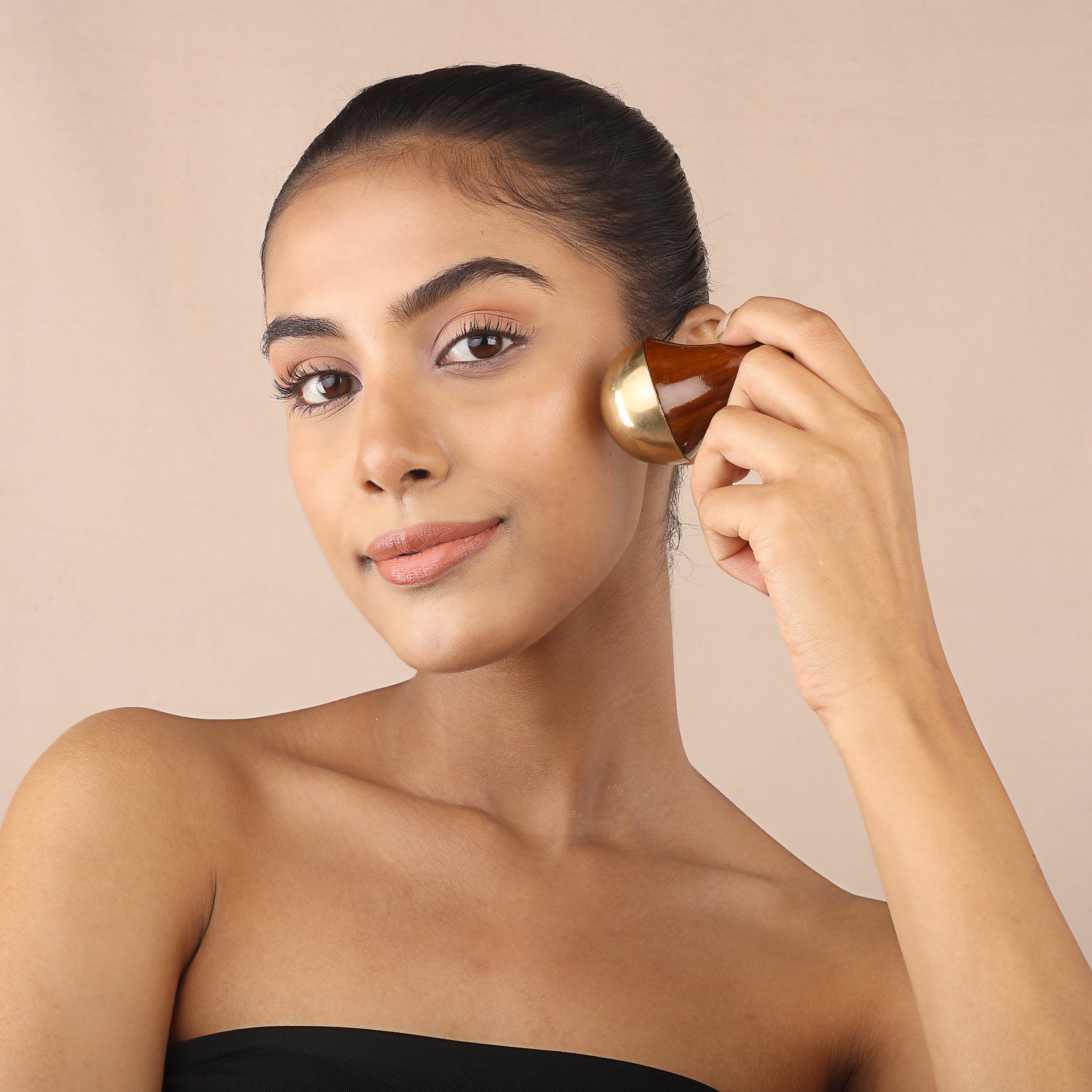
The way you apply oil to the face is as important as which oil you choose. Classical Ayurvedic facial massage (Mukha Abhyanga) is adapted to skin type:
Vata: Slow, nourishing, deliberate strokes. Emphasis on jaw, temples and the areas most prone to tension and dryness. Generous oil application, absorbed fully before washing.
Pitta: Gentle, non-vigorous. No friction. Light upward strokes. Avoid heat-generating pressure. The oil should be cooling — never warming spice-infused for Pitta.
Kapha: More vigorous than the other types. Brisk, invigorating upward strokes. More stimulating technique to counter Kapha's tendency toward stagnation. Less oil applied more thoroughly.
Read our complete guide to facial Abhyanga technique
Discover Your Dosha and Transform Your Skincare
The most effective skincare, in classical Ayurvedic terms, starts not with the skin but with understanding your constitution. Once you know your Dosha type — and which Dosha is currently elevated — every choice becomes more precise and more effective.
Get a Personalised Ayurvedic Skin Assessment
A self-assessment gives you a working framework. For a more complete skin and constitution assessment — including specific oil recommendations, a seasonal skincare protocol and a full Dinacharya plan — our AYUSH-certified Ayurvedic doctors offer personalised online consultations available from anywhere in Europe.
Book an online consultation with an AYUSH-certified Ayurvedic doctor
Frequently Asked Questions
Can I use the same face oil year-round? Classical Ayurveda recommends seasonal adaptation of oil choice as well as constitutional. In winter, even Pitta types may benefit from a slightly more nourishing formula. In summer, even Vata types may use a slightly lighter oil. Your constitution determines the baseline; the season determines the adjustment.
My skin changes — am I a different skin type at different times of year? Your constitutional skin type (Prakriti) does not change. What changes is your current skin condition (Vikriti) under seasonal influence. This is why Ayurvedic skincare feels more dynamic than conventional type-based skincare — it accounts for both.
Which Art of Vedas face oil is best for Pitta skin? Eladi Thailam is the most classically referenced for Pitta-type skin — cooling botanicals in a coconut base, from the Sahasrayogam. Browse the full classical face oil collection.
Can I get a personalised face oil recommendation for my specific constitution? Yes — our AYUSH-certified Ayurvedic doctors assess your constitution and current skin state and give you precise recommendations. Book an online consultation here.


