Dit artikel maakt deel uit van onze gidsenreeks Eladi Thailam versus Kumkumadi Thailam: welke klassieke ayurvedische gezichtsolie past bij u?.
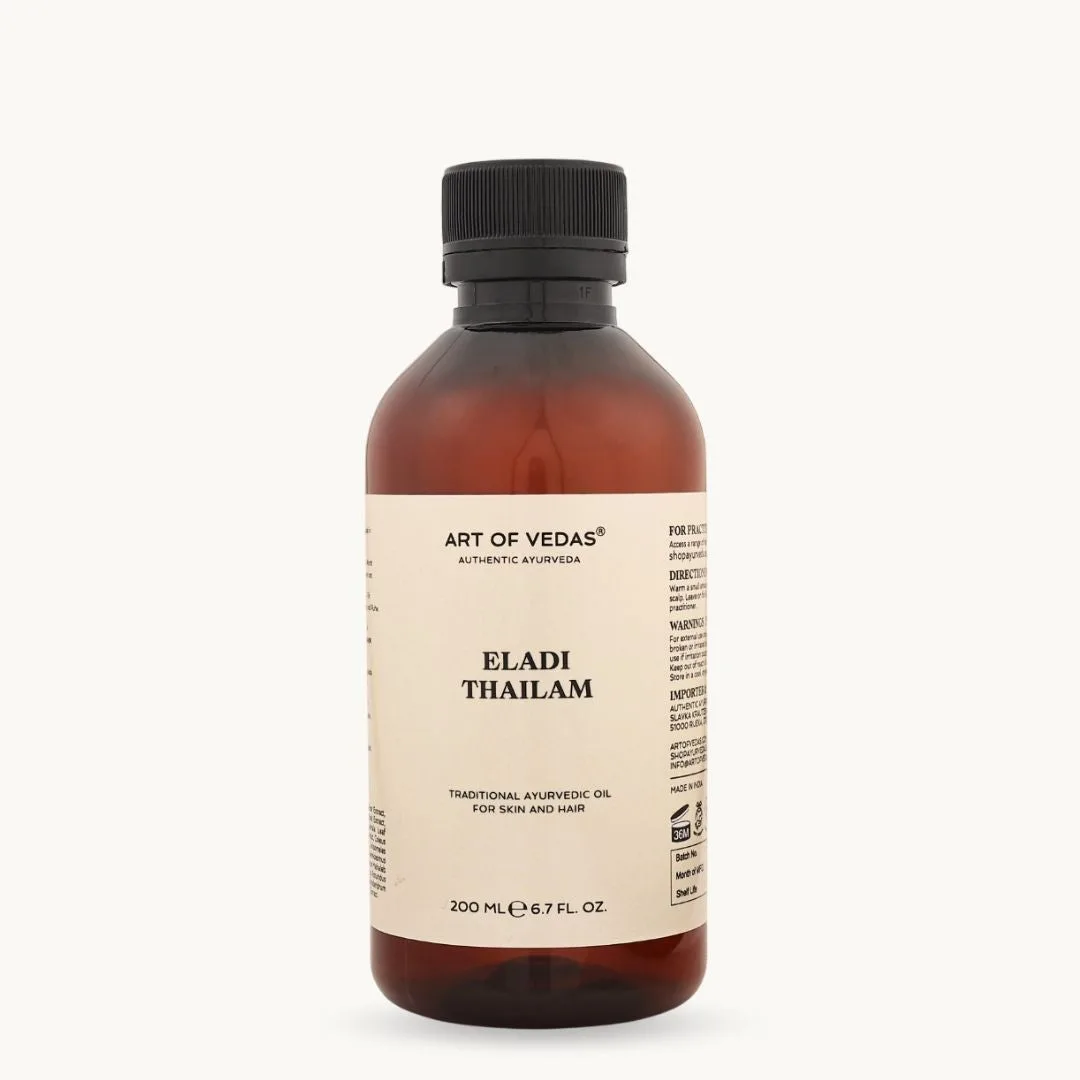
Belangrijke disclaimer: Eladi Thailam is een traditionele ayurvedische wellnessolie uitsluitend voor uitwendig gebruik. Het is geen geneesmiddel en behandelt, geneest of voorkomt geen enkele ziekte of medische aandoening. Alle hier beschreven voordelen zijn traditionele ayurvedische toepassingen en algemene observaties over huidwelzijn. Raadpleeg bij aanhoudende huidklachten, infecties, uitslag of elke vraag die medische aandacht verdient altijd een gekwalificeerde zorgverlener. Bestel hier Eladi Thailam.
U hebt een flesje Eladi Thailam in huis. En nu?
Deze gids beantwoordt elke praktische vraag over het gebruik van deze klassieke ayurvedische gezichtsolie: van hoeveel u gebruikt en wanneer u de olie aanbrengt tot de techniek van de gezichtsmassage, richtlijnen per huidtype, het combineren met andere producten en wat u bij regelmatig gebruik realistisch mag verwachten.
Maar dit is niet alleen een handleiding. Eladi Thailam komt uit een traditie waarin het ritueel van het aanbrengen net zoveel betekent als het product zelf. Ayurvedische Abhyanga (de praktijk van zelfmassage met warme olie) is een hoeksteen van dinacharya (de dagelijkse routine van zelfzorg), en het aanbrengen van Eladi Thailam is een gelegenheid om iets werkelijk voedends te doen voor zowel uw huid als uw zenuwstelsel.
Waarvoor wordt Eladi Thailam gebruikt?
In de klassieke ayurvedische praktijk is Eladi Thailam in de eerste plaats een mukhabhyanga-olie, een olie voor gezichtsmassage. Het woord mukha betekent gezicht en abhyanga betekent oliemassage, en deze combinatie is een van de dagelijkse rituelen die binnen de ayurvedische dinacharya traditioneel worden aanbevolen om de huid gezond en stralend te houden.
Naast mukhabhyanga wordt Eladi Thailam in de volgende traditionele toepassingen gebruikt:
Dagelijkse gezichtsverzorging, aangebracht in de ochtend of in de avond (of beide) als centrale stap in een ayurvedische gezichtsroutine, ter ondersteuning van voeding, tonus en helderheid van de huid.
Het Abhyanga-ritueel voor het gezicht, een bewustere en uitgebreidere zelfmassage die specifieke massagetechnieken voor de marma-punten volgt en traditioneel 2 tot 3 keer per week wordt uitgevoerd voor diepere ondersteuning van huid en zenuwstelsel.
Verzorging van hoofdhuid en haar, klassieke teksten beschrijven hoe Eladi voorafgaand aan het wassen op de hoofdhuid en in het haar wordt aangebracht, wat zowel het haar als de hoofdhuid voeding en een aromatisch voordeel geeft.
Combinatie met de Kansa-wand, Eladi Thailam is een uitstekende begeleidende olie voor gezichtsmassage met de Kansa-wand, waarbij de olie het metaal soepel over de huid laat glijden. De combinatie van de kruiden in Eladi met de traditioneel balancerende eigenschappen van de Kansa-wand vormt een van de aangenaamste en doeltreffendste ayurvedische gezichtsrituelen die u thuis kunt doen. Bekijk hier onze Kansa-wands.
De belangrijkste voordelen van Eladi Thailam
Deze voordelen weerspiegelen zowel klassieke ayurvedische beschrijvingen als modern onderzoek naar de ingrediënten van de formule. Voor een diepgaand beeld van de wetenschap achter deze voordelen verwijzen wij u naar onze gids over wetenschap en onderzoek.
Ondersteunt de helderheid van de huid en een gelijkmatige teint. De combinatie van varnya-kruiden (kruiden die de teint oplichten) in Eladi, saffraan, manjishtha, sandelhout en zoethout, wordt traditioneel gebruikt om een stralende, gelijkmatige huidtint te ondersteunen. Regelmatig gebruik wordt in verband gebracht met een geleidelijk stralender en helderder ogende teint.
Kalmeert de reactieve en gevoelige huid. De verkoelende kruiden in Eladi, in het bijzonder sandelhout en groene kardemom, hebben ontstekingsremmende en verzachtende eigenschappen die deze formule bijzonder geschikt maken voor een huid die neigt naar roodheid, gevoeligheid of warmtegerelateerde ongemakken.
Biedt diepe voeding zonder zwaarte. Sesamolie is een diep voedende basis die bij gebruik in de juiste hoeveelheid vlot in de huid trekt en geen zware of vettige film achterlaat. De huid voelt gehydrateerd en zacht aan, zonder dat er een laagje op blijft liggen.
Ondersteunt een evenwichtig huidmicrobioom. Meerdere ingrediënten in Eladi, zoals kardemom, tuvaraka, daruharidra en musta, hebben antimicrobiële eigenschappen die een evenwichtig huidmicrobioom kunnen ondersteunen. De selectieve antimicrobiële werking van de formule richt zich op mogelijk problematische organismen en blijft tegelijk mild genoeg voor dagelijks gebruik.
Rijk aan natuurlijke antioxidanten. Saffraan, manjishtha, zoethout, kurkuma, sandelhout en de basis van sesamolie dragen alle antioxidatieve verbindingen bij die de huid helpen ondersteunen tegen invloeden van buitenaf.
Ondersteunt de natuurlijke barrièrefunctie van de huid. De lipiderijke basis van sesamolie, gecombineerd met ingrediënten die de aanmaak van natuurlijke vochtfactoren ondersteunen, helpt de beschermende buitenste barrière van de huid in stand te houden: vocht blijft binnen en invloeden van buitenaf blijven buiten.
Past Eladi Thailam bij uw huidtype?
Vata-huidtypen (droog, fijn, gevoelig voor fijne lijntjes)
Eladi Thailam past uitstekend bij een Vata-dominante huid. De diep voedende en hydraterende eigenschappen van sesamolie, gecombineerd met de verwarmende kruiden in de formule, sluiten rechtstreeks aan op de belangrijkste kenmerken van de Vata-huid: droogheid, fijnheid, een neiging tot vochtlijntjes en een doffe teint in koudere maanden.
Beste aanpak voor de Vata-huid: gebruik Eladi Thailam 's ochtends en 's avonds. Breng de olie na het reinigen wat royaler aan, 4 tot 6 druppels. Masseer zacht in opwaartse bewegingen. Overweeg na het aanbrengen een warm kompres met een handdoek om de opname te bevorderen. Bij droog, koud weer kan Eladi dienstdoen als belangrijkste verzorgende product.
Pitta-huidtypen (gevoelig, reactief, gevoelig voor roodheid)
Eladi Thailam is bijzonder geschikt voor de Pitta-huid. Hier komen de verkoelende kruiden van de formule, sandelhout, saffraan, groene kardemom en zoethout, het best tot hun recht. De combinatie van diepe voeding met verkoelende, ontstekingsremmende eigenschappen maakt Eladi een uitstekende keuze voor een huid die neigt naar roodheid, gevoeligheid of reactieve reacties.
Beste aanpak voor de Pitta-huid: gebruik Eladi Thailam vooral in de avond, of zowel 's ochtends als 's avonds wanneer de huid niet overmatig vet is. Gebruik 3 tot 4 druppels, een lichte hand volstaat. Laat de olie volledig intrekken voordat u er iets anders overheen aanbrengt. Eladi komt bij dit huidtype bijzonder goed tot zijn recht als onderdeel van een avondritueel, wanneer het zenuwstelsel tot rust komt en het kalmerende effect van de olie versterkt wordt.
Kapha-huidtypen (vet, gevoelig voor verstopte poriën, gemengd)
Veel mensen met een Kapha-huid of een vette, gemengde huid vermijden gezichtsoliën instinctief, in de veronderstelling dat olie op een vette huid verstopte poriën verergert. Die aanname klopt niet altijd. De samenstelling van Eladi Thailam bevat een aanzienlijk aandeel antimicrobiële en zuiverende kruiden (kardemom, tuvaraka, daruharidra, musta) die inspelen op de neiging van de Kapha-huid tot verstopte poriën en overmatige talg.
Beste aanpak voor de Kapha-huid: begin met een lichte toepassing, maximaal 2 tot 3 druppels, uitsluitend in de avond. Breng de olie aan op een gereinigde, droge huid. Gebruik daarna desgewenst een lichte, olievrije verzorging. Geef het minstens 4 tot 6 weken van consequent gebruik voordat u het resultaat beoordeelt, omdat het huidmicrobioom en het talgevenwicht tijd nodig hebben om te verschuiven. Verergeren de verstopte poriën na 2 weken duidelijk, pauzeer dan en raadpleeg een ayurvedisch practitioner.
Gevoelige huid
Eladi Thailam geldt over het algemeen als een van de ayurvedische gezichtsoliën die het best bij een gevoelige huid passen, dankzij het verkoelende, ontstekingsremmende kruidenprofiel. Toch is een patchtest altijd essentieel voordat u een botanisch product op het hele gezicht aanbrengt, zie de instructies verderop.
Zo gebruikt u Eladi Thailam: stap voor stap
Dagelijkse toepassing, de eenvoudige methode (5 minuten)
Stap 1, reinig uw gezicht. Begin met een schone huid. Was het gezicht met een milde reiniger met een passende pH. Dep de huid droog met een schone doek en laat haar licht vochtig. Dat beetje vocht helpt de olie gelijkmatiger te verdelen en verbetert bij sommige huidtypen de opname.
Stap 2, verwarm de olie. Giet 3 tot 5 druppels Eladi Thailam in uw handpalm (begin met 3 druppels en pas aan op wat uw huid nodig heeft). Wrijf uw handpalmen 5 tot 10 seconden zacht tegen elkaar om de olie op huidtemperatuur te brengen. Deze stap activeert de aromatische verbindingen en verbetert de opname.
Stap 3, breng aan met zachte druk. Druk uw verwarmde handpalmen licht op uw gezicht en houd ze daar even, in plaats van meteen te wrijven. Zo maakt de olie eerst contact met het hele gezicht. Verdeel de olie vervolgens met uw vingertoppen in zachte, lichte bewegingen.
Stap 4, masseer in opwaartse bewegingen. Masseer de olie met de zachte kant van uw vingers (niet met de nagels) in de huid met zachte opwaartse en naar buiten gerichte bewegingen. Werk van het midden van het gezicht naar buiten: van de neus naar de wangen en slapen, van de kin omhoog naar de oren, langs de kaaklijn. Vermijd trekken of rekken aan de huid.
Stap 5, laat intrekken. Geef de olie 3 tot 5 minuten om in te trekken voordat u er iets overheen aanbrengt. U kunt deze tijd gebruiken voor een korte meditatie, een ademoefening of eenvoudigweg om het aroma en het gevoel van uw huid op te merken.
Stap 6, volg desgewenst met andere producten. Gebruikt u een vochtinbrengende crème, een serum of een zonnebrandcrème, breng die dan aan nadat de olie is ingetrokken. Volg bij ochtendgebruik altijd met een breedspectrum zonnebrandcrème met SPF 30 of hoger, want Eladi Thailam biedt geen UV-bescherming.
Het volledige mukhabhyanga-ritueel (15 tot 20 minuten)
Voor een diepere, bewustere praktijk, aanbevolen 2 tot 3 keer per week, bouwt de volgende techniek voort op traditionele ayurvedische principes van gezichtsmassage.
Voorbereiding: verwarm uw Eladi Thailam licht door het flesje 2 minuten in een kom met warm (niet kokend) water te plaatsen. De warme olie activeert aromatische verbindingen en versterkt de zintuiglijke ervaring en de opname aanzienlijk. Voor een volledige mukhabhyanga hebt u 6 tot 8 druppels nodig.
Hals en decolleté: begin onder het gezicht, aan de basis van de hals. Breng hier olie aan en masseer zacht omhoog langs de hals, van het sleutelbeen naar de kin. Gebruik langzame, afwisselende opwaartse bewegingen. Zo bereidt u de lymfebanen voor op het werk aan het gezicht zelf.
Voorhoofd: breng olie aan op het voorhoofd en maak met beide duimen of met de zachte kant van wijs- en middelvinger langzame, stevige bewegingen vanuit het midden van het voorhoofd naar de slapen. Werk van de haargrens omlaag naar de wenkbrauwen. Herhaal dit 5 tot 7 keer. Sluit af door beide handpalmen even plat op het voorhoofd te drukken met zachte, rustende druk.
Slapen (Shankha Marma): in de slapen ligt een belangrijk marma-punt met de naam Shankha. Oefen met de zachte kant van uw middelvingers zachte, cirkelvormige druk uit in langzame cirkels met de klok mee, 10 tot 15 cirkels aan elke kant. Dit gebied houdt vaak veel spanning vast en reageert goed op zachte, aandachtige aanraking.
Rond de ogen: gebruik rond het kwetsbare ooggebied uitsluitend uw ringvinger, de lichtste vinger. Trek of rek de huid hier nooit. Maak de allerzachtste cirkelvormige bewegingen net onder de wenkbrauwboog en langs de oogkasrand onder het oog. Oefen nooit rechtstreeks druk uit op het ooglid.
Wangen en middengezicht: maak met de zachte kant van uw vingers brede, cirkelvormige opwaartse bewegingen over de wangen, van de mondhoeken omhoog naar de slapen en van de neus naar de oren. Oefen zachte, rustende druk uit op de marma-punten van de jukbeenderen.
Neus en sinusgebied: strijk met uw wijsvingers zacht langs de neus, van de neusbrug omlaag, en oefen zachte druk uit op de overgang van neus naar wangen. Dit gebied komt overeen met de sinuspunten en reageert goed op zachte, aanhoudende druk.
Mond en kaak: masseer langs de kaaklijn van kin naar oor, met afwisselende handen in een liftende beweging. Masseer de kin en het gebied net onder de onderlip zacht in langzame cirkelbewegingen.
Oren (Karna): de oren zijn rijk aan marma-punten. Trek de oorlel drie keer zacht omlaag en masseer daarna de buitenrand van het oor zacht tussen duim en wijsvinger. Sluit af met zachte druk op de tragus, het kleine puntige klepje voor de gehoorgang.
Afsluiting: sluit af door uw handpalmen nog een keer zacht tegen uw gezicht te drukken. Neem drie langzame, diepe ademhalingen en merk de warmte, het aroma en de kwaliteit van uw huid op. Blijf een minuut stil zitten voordat u uw routine vervolgt.
Eladi Thailam met een Kansa-wand
Een van de aangenaamste manieren om Eladi Thailam te gebruiken is als begeleidende olie bij een gezichtsmassage met de Kansa-wand. Breng eerst 4 tot 6 druppels Eladi Thailam op uw gezicht aan en maak daarna met de ronde zijde van de Kansa-wand zachte achtvormige bewegingen over het voorhoofd. Ga verder naar de wangen met langzame cirkelbewegingen en daarna naar de kaaklijn en de hals. De Kansa-wand oefent een iets gelijkmatigere druk uit dan vingertoppen, wat hem doeltreffend maakt voor het werken langs de kaaklijn en de jukbeenderen.
Ontdek ons volledige assortiment Kansa-gezichtsmassagetools, speciaal ontworpen voor dit soort rituelen.
Hoeveel gebruikt u
De meest gemaakte fout is te veel gebruiken, waardoor de huid vettig aanvoelt in plaats van gevoed. Als algemene richtlijn: 3 druppels volstaat voor een lichte dagelijkse toepassing of voor vettere huidtypen. 4 tot 5 druppels is de standaard dagelijkse hoeveelheid voor de meeste huidtypen. 6 tot 8 druppels is passend voor een volledig mukhabhyanga-ritueel.
Praktische test: na het inmasseren hoort uw huid comfortabel en gevoed aan te voelen, niet vettig, niet plakkerig en zonder zichtbare olie op het oppervlak na 5 minuten. Blijft er na 5 minuten geregeld zichtbare olie achter, gebruik dan minder.
Gebruik in de ochtend of in de avond
Gebruik in de avond wordt over het algemeen aanbevolen als belangrijkste moment van aanbrengen. De huid doorloopt haar voornaamste herstel- en vernieuwingsprocessen tijdens de slaap, dus een voedende gezichtsolie in de avond biedt ondersteuning tijdens die natuurlijke herstelperiode. De aromatische verbindingen in Eladi hebben bovendien kalmerende eigenschappen die de overgang naar rust ondersteunen, wat een mukhabhyanga in de avond tot een werkelijk ontspannend ritueel aan het einde van de dag maakt.
Gebruik in de ochtend is passend voor de meeste huidtypen, in het bijzonder voor Vata- en Pitta-typen. Breng de olie aan voor uw zonnebrandcrème en geef haar eerst 3 tot 5 minuten om in te trekken. Voor een vette huid of een Kapha-huid kan gebruik in de ochtend zwaar aanvoelen, en is uitsluitend gebruik in de avond passender.
Zowel in de ochtend als in de avond werkt prachtig voor een droge, rijpere of Vata-dominante huid, zeker in de wintermaanden, wanneer droogte in de omgeving de behoefte van de huid aan lipiden vergroot.
Eladi Thailam combineren met andere huidverzorgingsproducten
Het principe olie eerst: breng Eladi Thailam aan op een gereinigde huid, voor producten op waterbasis (serums, essences, vochtinbrengende crèmes). Breng eerst de olie aan, laat haar intrekken en leg er desgewenst daarna producten op waterbasis overheen.
Met een vochtinbrengende crème: breng eerst Eladi aan, wacht 3 tot 5 minuten en breng daarna een lichte vochtinbrengende crème op waterbasis aan. U kunt ook 1 tot 2 druppels Eladi door uw crème mengen voordat u die aanbrengt.
Met zonnebrandcrème: breng zonnebrandcrème altijd als laatste stap aan voordat u het huis verlaat. Eladi biedt geen enkele UV-bescherming.
Met retinoïden of voorgeschreven behandelingen: gebruikt u voorgeschreven retinoïden of andere voorgeschreven huidbehandelingen, overleg dan met uw dermatoloog voordat u Eladi Thailam toevoegt.
Met chemische exfolianten (AHA's en BHA's): gebruik Eladi Thailam en chemische exfolianten op gescheiden momenten, bijvoorbeeld exfolianten in de ochtend en Eladi in de avond. Breng beide niet tegelijk aan.
Met andere producten van Art of Vedas: Eladi Thailam combineert prachtig met Kansa-wandtools en vormt een mooie aanvulling op ayurvedische haaroliën voor een volledige Abhyanga-praktijk.
Wat u mag verwachten: een realistisch tijdpad
De klassieke ayurvedische benadering legt de nadruk op het opbouwen en behouden van evenwicht in de loop van de tijd. Dit is geen product dat bedoeld is om van de ene op de andere dag dramatische veranderingen te geven.
De eerste dagen: het meest onmiddellijk merkbare effect is zintuiglijk, het aroma van kardemom, sandelhout en saffraan en het gevoel van een goed gevoede huid na de massage. De huid voelt doorgaans direct na het aanbrengen zachter en comfortabeler aan.
De eerste twee weken: de huid gaat zich blijvend comfortabeler voelen. Een reactieve huid toont vaak minder gevoeligheid en minder roodheid. Een droge huid voelt de hele dag door meer in balans. Mogelijk merkt u dat het ritueel zelf iets wordt waar u naar uitkijkt.
Vier tot zes weken: dit is het moment waarop de meeste gebruikers zichtbaarder veranderingen beginnen op te merken. De teint oogt gelijkmatiger en stralender. Fijne lijntjes kunnen zachter ogen, vooral de lijntjes die met droogheid samenhangen. De huidtextuur voelt doorgaans gladder aan.
Drie maanden en verder: bij de opgebouwde effecten van consequent gebruik gedurende drie maanden of langer komt het klassieke begrip Rasayana het duidelijkst naar voren. Een huid die in die periode consequent goed gevoed is, vertoont doorgaans een merkbaar gezondere, veerkrachtigere kwaliteit.
Dit zijn algemene observaties op basis van traditionele gebruikspatronen en gebruikerservaring. Individuele resultaten verschillen sterk, afhankelijk van huidtype, leeftijd, algehele gezondheid, voeding, stressniveau en de regelmaat van het gebruik.
Bewaren en houdbaarheid
Bewaar de olie op een koele, donkere plaats, uit direct zonlicht en warmte. Sluit de dop na gebruik altijd goed om oxidatie te voorkomen. Voorkom dat er water in het flesje komt en gebruik de olie niet met natte handen. Bij juiste bewaring blijft Eladi Thailam doorgaans 12 tot 18 maanden vanaf de bereidingsdatum in optimale staat. Ontwikkelt de olie een ranzige of duidelijk veranderde geur, staak dan het gebruik.
De patchtest
Voordat u Eladi Thailam voor het eerst op uw gezicht aanbrengt, is een patchtest altijd aan te raden. Breng een kleine hoeveelheid aan op de binnenzijde van uw onderarm. Laat die 24 tot 48 uur ongemoeid. Treedt er geen reactie op (roodheid, jeuk, uitslag, zwelling), ga dan over tot gebruik op het gezicht. Treedt er wel een reactie op, was de olie dan onmiddellijk af en staak het gebruik.
Veelgestelde vragen
Kan ik Eladi Thailam als mijn enige verzorgende product gebruiken? Voor een droge huid en Vata-huidtypen: ja, veel mensen vinden Eladi Thailam volledig toereikend als zelfstandige dagelijkse verzorging, zeker bij warm weer. Bij koude, droge omstandigheden of bij een zeer droge huid kan een vochtinbrengende crème op waterbasis onder de olie vollediger ondersteuning bij de hydratatie geven.
Kan Eladi Thailam naast het gezicht ook op het lichaam worden gebruikt? Ja. Hoewel de olie specifiek is samengesteld als gezichts- en huidwellnessolie, is er geen reden waarom zij niet op andere delen van het lichaam gebruikt kan worden. Voor Abhyanga van het hele lichaam biedt Art of Vedas een reeks ayurvedische Thailams die daar beter voor geschikt zijn.
Hoelang doet een flesje? Bij 3 tot 5 druppels per toepassing gaat een standaardflesje van 100 ml bij dagelijks gebruik doorgaans 8 tot 12 weken mee.
Kan ik Eladi Thailam tijdens de zwangerschap gebruiken? Uitwendig gebruik van Eladi Thailam op het gezicht wordt tijdens de zwangerschap voor de meeste mensen als passend beschouwd. Elke zwangerschap is echter uniek en gevoeligheden kunnen in deze periode sterk veranderen. Raadpleeg altijd uw zorgverlener voordat u tijdens de zwangerschap een nieuw huidverzorgingsproduct introduceert.
Wordt Eladi Thailam op dieren getest? Art of Vedas voert op geen van zijn producten dierproeven uit.
Begin uw Eladi-ritueel
Eladi Thailam is niet zomaar een huidverzorgingsproduct, het is een uitnodiging om een werkelijk oude, zorgvuldig samengestelde ayurvedische praktijk in uw dagelijks leven op te nemen. De combinatie van 25 of meer klassieke kruiden in een prachtig bereide basis van sesamolie, het ritueel van gezichtsmassage met warme olie en het gelaagde aroma van kardemom, sandelhout en saffraan vormt samen een ervaring die zich moeilijk laat vergelijken met welke moderne gezichtsolie dan ook.
Bestel Eladi Thailam, traditioneel bereid, authentiek samengesteld en klaar voor uw ritueel.
Verder ontdekken