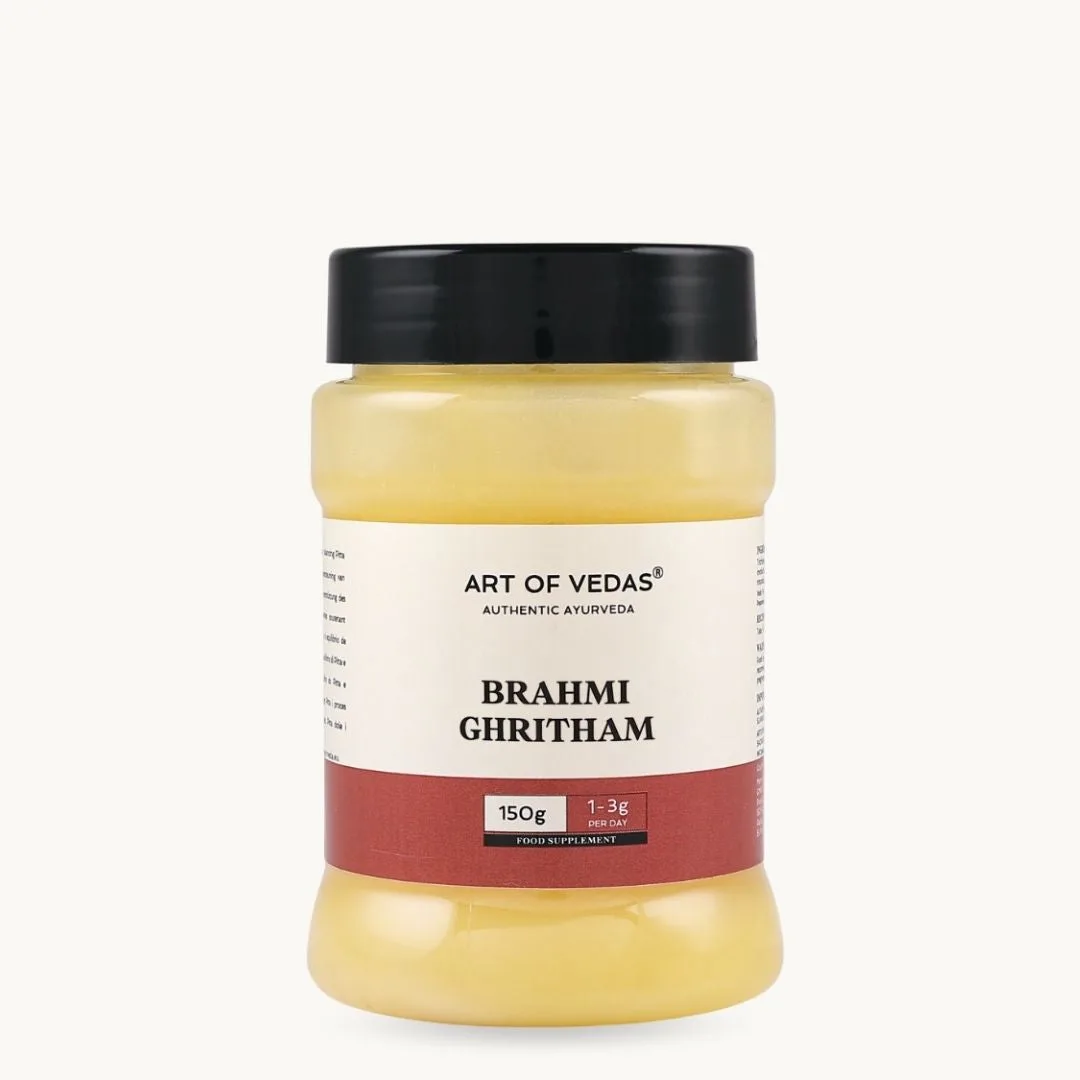
Ghritham (Sanskriet: Ghrita; meervoud: Ghrithams) - ghee - neemt een unieke plaats in binnen de klassieke Ayurveda. Onder de vier klassieke vetgebaseerde bereidingen (Sneha Kalpanas) beschreven in de Ashtanga Hridayam, wordt ghee beschreven als de beste: "Van alle vetstoffen is ghee de beste (Sarva Snehottama Ghritam)." ghee, bereid door basische ghee te koken met kruidenafkooksels via de klassieke Ghrita Paka-methode, behoort tot de meest verfijnde en diep doordringende bereidingen in de gehele Ayurveda-farmacopoeia. Als u op zoek bent naar Ayurveda Ghee of Ghee in Europa, vertegenwoordigen klassieke Ghrithams zoals Brahmi Ghritham het toppunt van klassieke ayurvedische samengestelde formuleringen.
Waarom ghee als superieur wordt beschouwd in klassieke Ayurveda
Klassieke teksten beschrijven ghee via het Rasa-Virya-Vipaka kader:
-
Rasa: Madhura (zoet)
-
Virya: Sheeta (verkoelend) - waardoor ghee het voorkeurs Rasayana-drager is voor Pitta types en voor elke bereiding waarbij verkoelende penetratie vereist is
-
Vipaka: Madhura (voedend, opbouwend)
-
Belangrijke eigenschappen: Guru (zwaar), Snigdha (vettig), Mridu (zacht)
Klassieke teksten beschrijven ghee als het unieke vermogen hebbend om de eigenschappen van welke kruiden er ook in worden gekookt over te nemen - beschreven in Ayurveda-farmacologie als Yogavahi. Dit is de klassieke basis voor Ghrithams: de ghee basis draagt de kruiden eigenschappen diep in de weefsels, inclusief de subtielste weefsellagen en de kanalen van de geest (Manovaha Srotas). De Charaka Samhita beschrijft ghee specifiek als het beste drager voor Rasayana kruiden met Medhya eigenschappen - waardoor Ghrithams de klassieke premium vorm zijn voor bereidingen gericht op het zenuwstelsel en de geest.
Het Ghrita Paka proces: hoe Ghrithams worden gemaakt
Klassieke Ghrita Paka (ghee-kookproces) volgt een specifieke methode beschreven in de Ashtanga Hridayam en Sharangadhara Samhita:
- Het kruidenmateriaal wordt eerst bereid als een waterafkooksel (Kashayam) door langzaam te koken in vier delen water tot het is gereduceerd tot één deel
- De verse kruidenpasta (Kalka) wordt apart bereid
- Koemelk (Dugdha) wordt toegevoegd voor melkverwerkte Ghrithams
- Het Kashayam, Kalka en melk worden gecombineerd met basische ghee en op laag vuur gekookt totdat al het vocht is verdampt - getest met de klassieke Varti (lonttest)
- De bereide Ghritham wordt gezeefd en bewaard op een koele, donkere plaats
Dit langzame, arbeidsintensieve proces - dat typisch 6, 8 uur zorgvuldig koken vereist - onderscheidt een klassieke Ghritham van simpelweg kruidenpoeder in ghee mengen. De langdurige Ghrita Paka wordt als essentieel beschreven om de kruiden eigenschappen volledig over te dragen aan de ghee basis.
Brahmi Ghritham: de klassieke Medhya Rasayana ghee
De meest beroemde en veelgebruikte klassieke Ghritham voor cognitieve en zenuwstelselondersteuning. Onze Brahmi Ghritham volgt de klassieke formule beschreven in de Ashtanga Hridayam en Charaka Samhita - bereid met Brahmi (Bacopa monnieri) als de primaire kruid naast andere klassieke Medhya kruiden.
Klassieke teksten beschrijven Brahmi Ghritham als de voorkeursdrager voor langdurige Medhya Rasayana praktijk - superieur aan Brahmi poeder in capsulevorm voor de diepste weefselpenetratie en werking op het zenuwstelsel. De ghee basis draagt Brahmi's Medhya werking specifiek naar Majja Dhatu (zenuwweefsel) en de subtiele kanalen van de geest.
Klassiek gebruik: beginnen met ongeveer 1 theelepel (5ml) op een lege maag in de ochtend, de ghee licht verwarmen tot vloeibaar voor inname. Warm water kan daarna worden gedronken. Zie het productetiket voor specifieke aanwijzingen.
Voor het volledige overzicht van Brahmi als klassiek kruid, zie onze Brahmi gids.
Hoe Ghritham te gebruiken: algemene richtlijnen
-
Temperatuur: Verwarm de Ghritham altijd voorzichtig (plaats het potje in warm water) tot vloeibaar voor inname - niet in de magnetron
-
Tijdstip: Klassiek ingenomen op een lege maag in de ochtend, of zoals voorgeschreven door uw therapeut
-
Anupana: Warm water na inname is de standaard klassieke aanbeveling
-
Bewaring: Bewaar op een koele, droge plaats uit direct licht. Ghritham hoeft niet gekoeld te worden maar moet onder 25°C worden gehouden in warme klimaten
-
Duur: Klassieke Rasayana protocollen met Ghritham lopen meestal 7, 30 dagen. Langdurig gebruik wordt als het meest gunstig beschreven maar dient idealiter onder begeleiding van een therapeut te gebeuren
Voor wie is Ghritham geschikt?
Medicinaal Ghritham is het meest geschikt voor Vata en Pitta types, en voor mensen met droge, uitgeputte of verhitte condities. De verkoelende, voedende en diep doordringende eigenschappen maken het bijzonder geschikt voor wie diepe cognitieve en zenuwstelsel Rasayana zoekt (Brahmi Ghritham) en voor wie deelneemt aan langdurige Rasayana programma’s naast dieet- en leefstijlaanpassingen. Voor Kapha types of mensen met actieve spijsverteringszwakte (Mandagni) dient Ghritham spaarzaam te worden gebruikt en idealiter onder begeleiding van een therapeut.
Voor advies over uw Dosha type, doe onze Dosha test. Zie ook onze complete gids over Brahmi en onze bredere Ayurveda-kruiden gids. Het volledige Ghritham assortiment is beschikbaar in onze Supplementen collectie.
Art of Vedas Ghrithams zijn voedingssupplementen, geen geneesmiddelen. Ze vervangen geen consult met een arts of gekwalificeerde Ayurveda-therapeut. Overschrijd de aanbevolen dagelijkse dosering op het productetiket niet.
Ontdek meer in deze serie