The knees are working joints in the fullest sense: stairs, pavements, squats, long walks and longer flights all pass through them. Ayurveda has always given them particular attention, and in professional settings that attention takes the form of Janu Basti, a therapy in which warmed preparation is pooled over the knee inside a ring of dough. At home, the tradition offers something simpler and entirely practical: a warm Kuzhambu, applied slowly around the joint and left to do its quiet work. This guide explains which preparations classical practice favours around the knees and how to build the routine into an ordinary evening.
Why a semi-solid preparation suits the knee
The knee is precisely the kind of surface on which an oil struggles: curved, mobile and vertical for most of the day. A Kuzhambu behaves differently because it is not an oil. Cooked on a three-fat base of sesame, coconut and castor with herbal decoctions and pastes until it sets semi-solid, it softens with gentle warmth, wraps the joint in a thin, stable layer and absorbs slowly over the whole session. The botanicals stay in contact with the applied area rather than ending up in a towel. If you have never handled the format, begin with our general guide on how to warm and apply a Kuzhambu.
What the routine offers
- Focused warmth for joints that flex several thousand times a day
- Traditional care for everyday joint comfort, especially after stairs, hikes and long standing
- A gentle evening ritual for older knees that appreciate slow, warm attention
- Local application without waste: one teaspoon serves both knees
- A natural companion to lower-back and calf care in the same evening
The routine, step by step
Warm the closed jar in a bowl of hot water for five to ten minutes. Sit on a bed or sofa with the leg extended and the knee lightly supported by a rolled towel underneath. Take half a teaspoon of the softened preparation for each knee and apply it with slow, gentle circles around the kneecap, never pressing on the kneecap itself: inner side, outer side, above and below, then long soft strokes up the thigh and down the calf to close.
Let each knee receive four or five unhurried minutes. Then rest with the legs extended and warm, ideally under a light blanket, for another twenty minutes before wiping away residue with a warm, damp cloth. In cold weather a warm towel wrapped loosely around the joint during the rest makes a noticeable difference. If the knees are part of a wider evening, our lower back routine pairs with this one naturally. As with any self-care, know its limits: discomfort that is persistent, swelling or the result of an accident belongs with a qualified professional, not a jar.
The preparations tradition favours here
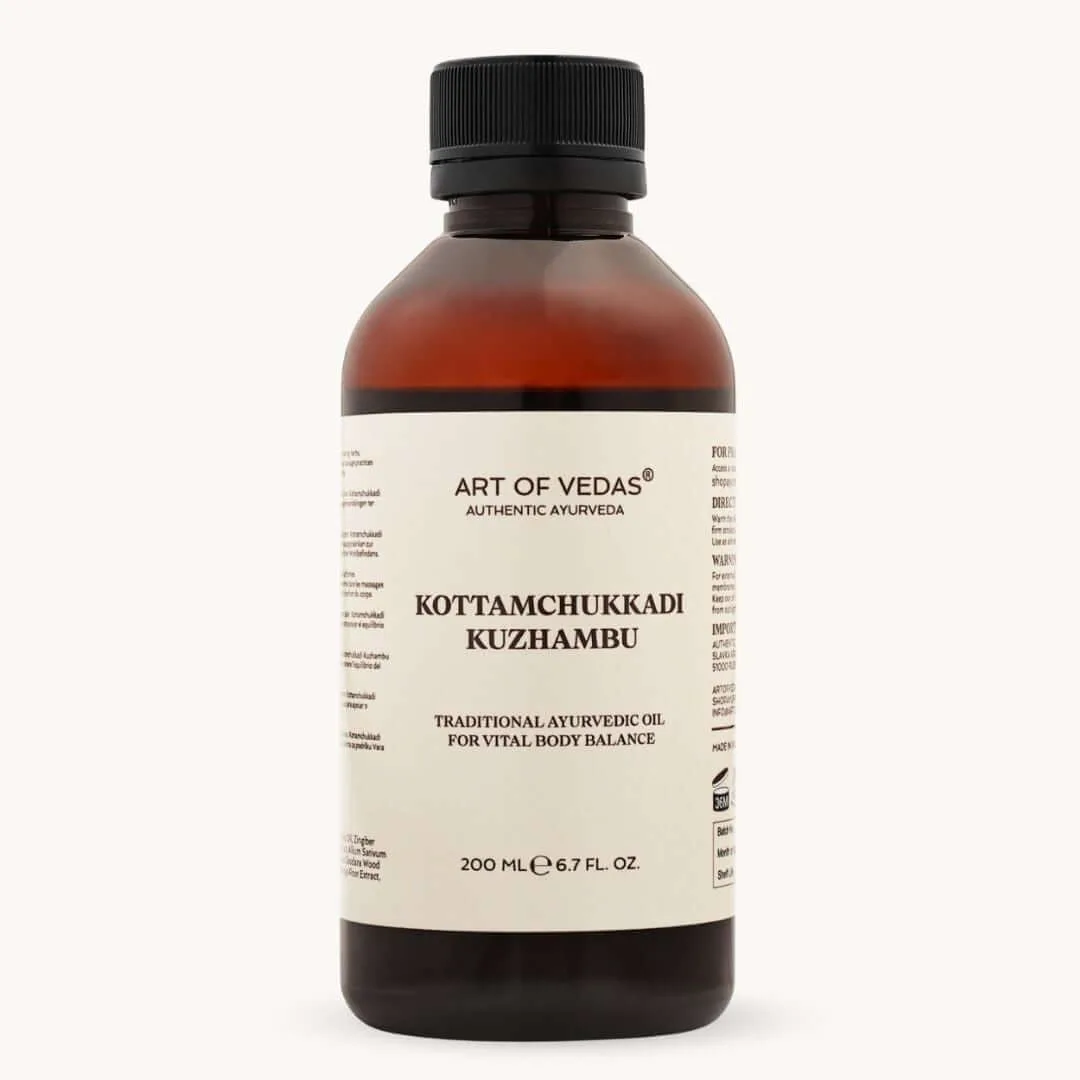
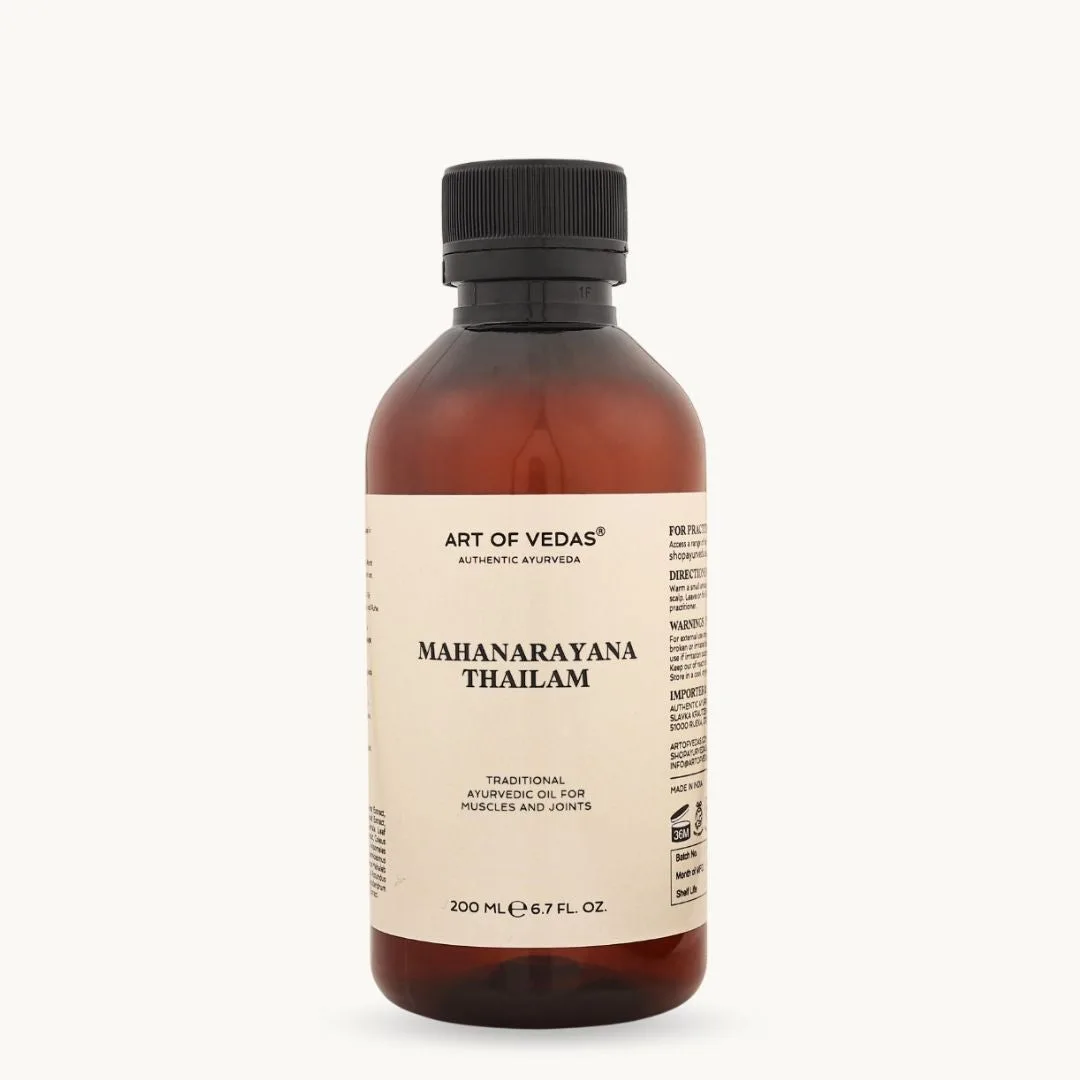
Around the knees classical practice reaches first for the warming lower-body family. Kottamchukkadi Kuzhambu is the household standard: named for Kottam and Chukku, the classical dried ginger, its botanicals are ground to paste, cooked into the three-fat base and finished as a distinctly warming semi-solid preparation for hips, knees and legs. The great joint oil of the wider tradition, Mahanarayana Thailam, serves the same territory in flowing form and is the choice when you prefer an oil or want to cover the whole leg; its full story is told in our Mahanarayana Thailam complete guide. Many households keep both: the Kuzhambu for focused evening work on the joint, the Thailam for fuller massage.
Frequently Asked Questions
How long should the preparation stay on the knee?
Twenty to thirty minutes of rest after the massage is the traditional measure. Wipe away what remains afterwards with a warm cloth.
Can I do this after sport?
Yes, after the shower. Post-exertion evenings are exactly when the routine earns its keep; keep the strokes gentle and the pressure light.
Kuzhambu or Mahanarayana Thailam: which should I choose?
Choose the Kuzhambu for targeted work that stays on the joint, the Thailam for flowing massage over the whole leg. They share the same tradition and complement each other.
Should I massage the kneecap directly?
No. Work in circles around it, on the soft tissue of the inner and outer knee and above and below the joint.
How often is reasonable?
Daily during demanding periods, otherwise two to four evenings a week. Consistency over months matters more than intensity in any one session.
This article describes traditional Ayurvedic practice for general information and personal care. It is not medical advice. If discomfort persists or follows an accident, if you are pregnant or if your skin reacts easily, please consult a qualified professional.