



ONTGRENDEL 10% KORTING

The Ayurvedic Daily Nasal Oil Ritual
Nasya Therapie
Een oude Ayurvedische praktijk om de zintuigen te zuiveren, de geest te kalmeren en de ruimte tussen ademhaling en hersenen te voeden.
Geen producten gevonden
Gebruik minder filters of verwijder alles

How to Practice Nasya (Pratimarsha Nasya)
What you need
Your chosen Nasya oil (Anu Thailam or Shadbindu Thailam), a cup of warm water to heat the bottle, and a comfortable place to lie down or sit with your head tilted back.
Step 1 — Warm the oil
Place the bottle in a cup of warm water for 1–2 minutes. The oil should reach body temperature — test a drop on your inner wrist. It should feel neither warm nor cool.
Step 2 — Position yourself
Lie on your back with a small pillow under your shoulders so your head tilts gently backward. Or sit in a chair and tilt your head back.
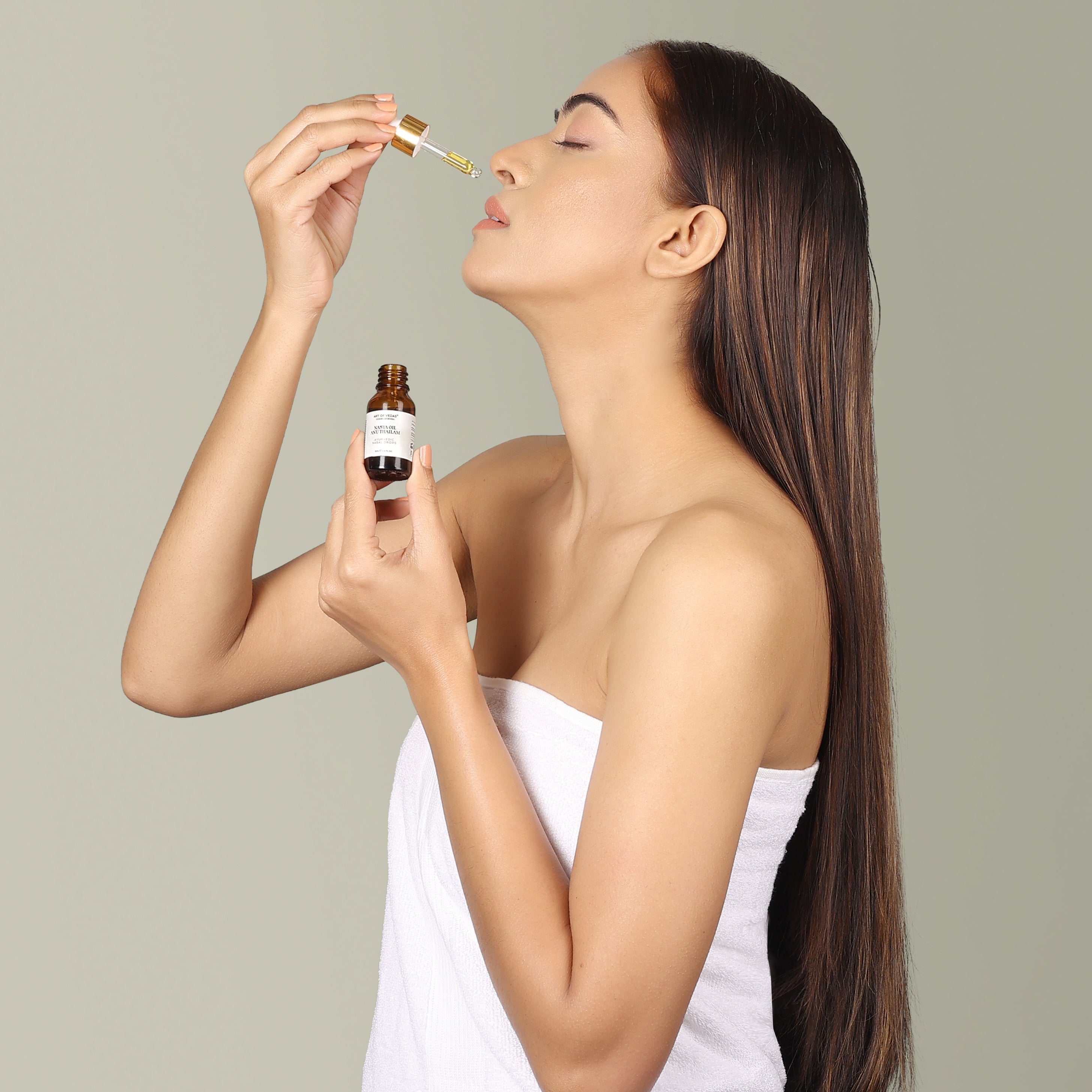
Step 3 — Apply the oil
Place 2 drops in each nostril. Inhale gently — just enough to draw the oil slightly deeper. You may feel the oil reach the back of your throat. This is normal.
Step 4 — Rest
Stay in position for 1–2 minutes. You can gently massage the bridge of the nose and the area around the nostrils.
Step 5 — Sit up and clear
Sit up slowly. If any oil has reached your throat, spit it out gently. Blow your nose softly if needed.
When to practice
Morning, on an empty stomach, after washing your face. This is the traditional Pratimarsha Nasya — the gentle, daily version of Nasya described for home practice.
When to skip
During a cold or flu with thick, coloured mucus. During fever. Immediately after meals or vigorous exercise. If you have recently had nasal surgery, wait until fully healed.
Nasya Therapy — Common Questions
Nasya is the Ayurvedic practice of applying a small amount of herbal oil to the nasal passages. It is part of Dinacharya, the classical daily routine described in texts like Ashtanga Hridayam. The daily home version is called Pratimarsha Nasya — two drops of warm oil per nostril each morning.
Both are classical Nasya oils from different Ayurvedic texts. Anu Thailam (from Ashtanga Hridayam) is lighter, Tridosha-balancing, and made for everyday practice. Shadbindu Thailam (from Bhaishajya Ratnavali) is warmer and more penetrating, with a spiced, aromatic character — traditionally used for shorter, more focused courses. If you are new to Nasya, start with Anu Thailam.
Place the bottle in a cup of warm water for 1–2 minutes. Test a drop on your inner wrist, it should feel neutral, neither warm nor cool. Never microwave the bottle or heat it directly.
Yes. The nasal passages connect to the throat. When you apply oil and tilt your head back, some may flow down. You can spit it out or simply swallow it, both are fine. This is a normal part of the practice.
During a cold or flu with thick, coloured discharge. During fever. Immediately after eating (wait at least 30 minutes). After vigorous exercise (wait until your breathing settles). If you have had recent nasal surgery, wait until fully healed and consult your practitioner first.
Yes, this is a traditional combination. Jala Neti (nasal rinsing with warm salt water) is often practiced first to clear the passages, followed by Nasya oil to nourish them. Wait 10–15 minutes between the two practices so the passages are not too wet when you apply the oil.
The sensation of warm, herbal oil coating the nasal passages is immediate. How the practice feels over time depends on consistency, most people who practice daily notice a difference in how their mornings feel within the first one to two weeks.
Gerelateerde Rituelen


