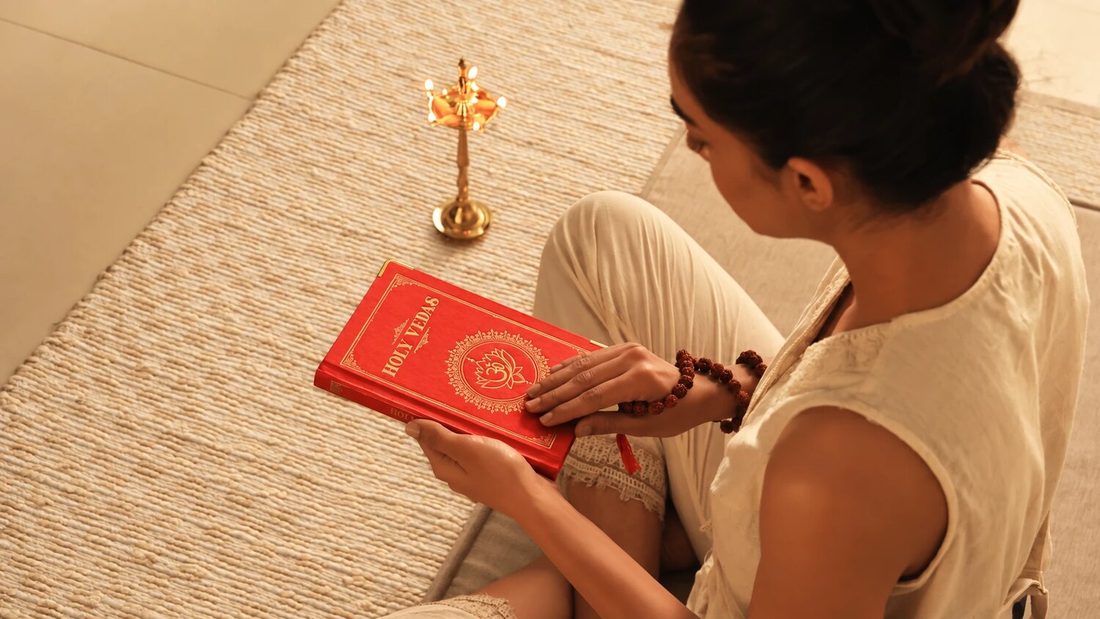
Dhanwantharam Kuzhambu is de halfvaste gedaante van een van de meest gewaardeerde klassieke recepten van de Ayurveda. Waar de bekende Thailam van dezelfde naam vrij vloeit en zich leent voor brede, uithalende bewegingen, houdt de Kuzhambu haar vorm, legt zij zich op de plek waar zij is aangebracht en geeft zij haar karakter langzaam vrij. In veel huishoudens is juist dit onthaaste formaat het formaat dat men bewaart voor geconcentreerde, aandachtige verzorging.
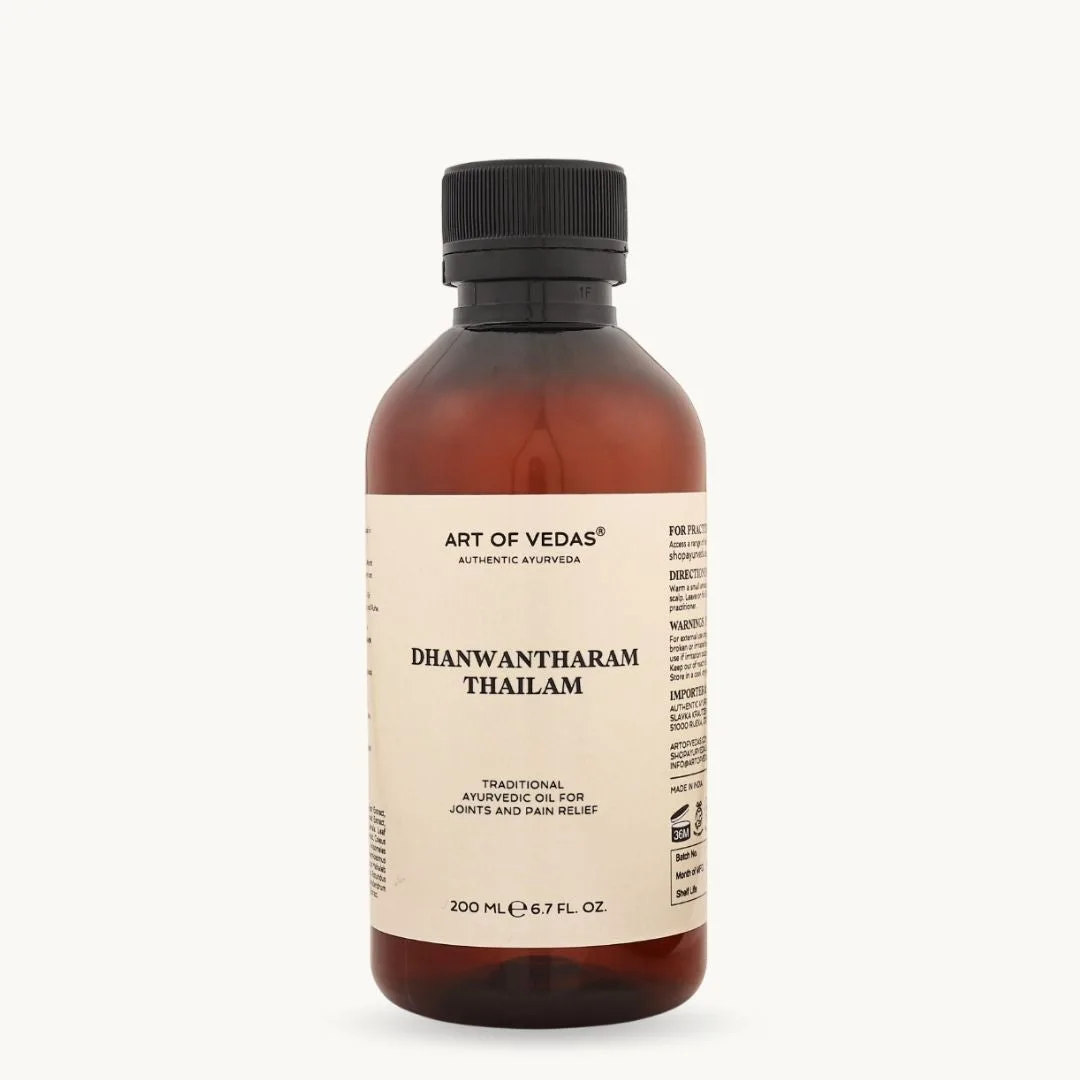
Deze gids legt uit wat Dhanwantharam Kuzhambu is, hoe het klassieke recept is samengesteld en wanneer de traditie naar het halfvaste formaat grijpt in plaats van naar de vloeibare Dhanwantharam Thailam.
Wat is Dhanwantharam Kuzhambu?
Een Kuzhambu is een klassieke bereiding met een zachte, halfvaste consistentie. Het is geen olie en het gedraagt zich ook niet als olie. Zacht verwarmd en tussen de handpalmen bewerkt wordt het soepel genoeg om uit te strijken, maar het blijft liggen waar het is aangebracht in plaats van over de huid weg te lopen. Eenmaal opgebracht trekt het langzaam en gestaag in. Precies daarom waardeert de traditie de Kuzhambu voor gerichte, plaatselijke toepassing, terwijl de Abhyanga over het hele lichaam het domein blijft van de vloeiende Thailam. Dhanwantharam Kuzhambu brengt het geroemde Dhanwantharam-recept over naar dit bedachtzame, geconcentreerde formaat.
Het klassieke recept
Het hart van het recept is Bala, de plant Sida cordifolia, die de klassieke compendia van de Ayurveda beschrijven als diep stabiliserend en voedend. Bij Bala voegt zich Dashamoola, een overgeleverde groep van tien wortels, samen met verdere planten die in twee klassieke fasen worden verwerkt: Kashayam, een langzaam kruidenafkooksel, en Kalka, een verse kruidenpasta. Deze worden geduldig verwerkt in een basis van plantaardige vetten tot de bereiding de dichte, meegevende textuur bereikt die een echte Kuzhambu kenmerkt. Aan dit proces is niets gehaast, en de uiteindelijke textuur weerspiegelt juist dat geduld.
Traditionele voordelen van het halfvaste formaat
Binnen de traditionele praktijk wordt het halfvaste formaat bewust gekozen. Tot de eigenschappen ervan behoren:
- Het blijft op de behandelde plek liggen, wat past bij gerichte aandacht voor de onderrug, de knieën of de schouders.
- Het trekt langzaam in en draagt zo een lange, onthaaste periode van warmte en rust.
- De dichte, aardende textuur wordt van oudsher verbonden met Vata-kalmerende routines.
- Een kleine hoeveelheid volstaat, wat het een bedachtzame keuze maakt voor regelmatige, gerichte verzorging.
- De rijkdom ervan past bij de koudere Europese maanden, waarin de traditie vollere texturen verkiest.
Hoe en wanneer de Kuzhambu wordt gebruikt
De gesloten pot wordt in een kom aangenaam warm water gezet tot de inhoud zacht wordt; rechtstreeks verhitten gebeurt nooit. Een kleine hoeveelheid wordt vervolgens tussen de handpalmen bewerkt en met langzame, bedachte bewegingen op de gekozen plek aangebracht. De traditie laat de bereiding een ruime tijd op de huid rusten voordat zij met warm water wordt verwijderd. Is dit formaat al lang verbonden met rustige, zorgvuldig ingerichte momenten van de dag, een huishoudelijk gebruik dat wij beschrijven in ons artikel over de traditie van Dhanwantharam Kuzhambu. Wie de twee consistenties tegen elkaar afweegt, vindt een rechtstreekse vergelijking in Dhanwantharam Kuzhambu en Thailam vergeleken, en het bredere verhaal van het recept staat in onze volledige gids over Dhanwantharam Thailam. Wie de rijkste uitdrukking van deze familie waardeert, vindt bij Art of Vedas bovendien Dhanwantharam Mezhukupakam, een bijzonder zachte en geconcentreerde bereiding.
Veelgestelde vragen
Is Dhanwantharam Kuzhambu een olie?
Nee. Een Kuzhambu is een halfvaste klassieke bereiding. Zij wordt zacht bij milde warmte en laat zich onder de handpalmen uitstrijken, maar zij schenkt of vloeit niet zoals een olie en blijft op de plek waar zij is aangebracht.
Waarin verschilt zij van Dhanwantharam Thailam?
De recepttraditie is gedeeld, de consistentie en het gebruik niet. De Thailam is een vloeibare olie voor toepassing over grote delen van het lichaam, terwijl de Kuzhambu halfvast is, trager intrekt en voorbehouden blijft aan gerichte, plaatselijke toepassing.
Moet de Kuzhambu vóór gebruik worden verwarmd?
Ja, zacht. Zet de gesloten pot enkele minuten in aangenaam warm water tot de textuur meegeeft. Rechtstreekse hitte, of dat nu vuur of magnetron is, kunt u beter vermijden, omdat die de zorgvuldig bereikte consistentie verstoort.
Hoe lang moet zij op de huid blijven?
De traditie houdt van geduld. Twintig tot dertig minuten rust is een gangbaar huishoudelijk ritme, gevolgd door verwijderen met warm water. Velen nemen die tijd bewust als een pauze in de dag.
Wie grijpt van oudsher naar het halfvaste formaat?
Wie één plek gericht wil verzorgen in plaats van het hele lichaam: de onderrug na een lange dag, de knieën bij koud weer, of een rustig, aandachtig avondritueel waarvoor men onder vakkundige begeleiding de tijd neemt.
Dit artikel beschrijft traditionele ayurvedische praktijk en is uitsluitend bedoeld als algemene informatie. Het vormt geen medisch advies, geen diagnose en geen behandeling. Raadpleeg een gekwalificeerde zorgverlener voordat u met een nieuwe routine begint, in het bijzonder wanneer u zwanger bent, borstvoeding geeft of onder medische behandeling staat.